
-
Heavy duty dog chain collar
Regular price $35.00 USDRegular priceUnit price per$41.00 USDSale price $35.00 USDSale -
Dog slip chain collar
Regular price $35.00 USDRegular priceUnit price per$41.00 USDSale price $35.00 USDSale -
Black chain dog collar
Regular price $28.00 USDRegular priceUnit price per$35.00 USDSale price $28.00 USDSale -
Heavy dog chain collar
Regular price $28.00 USDRegular priceUnit price per$35.00 USDSale price $28.00 USDSale -
Dog collar silver chain
Regular price $35.00 USDRegular priceUnit price per$41.00 USDSale price $35.00 USDSale -
Gold dog chain collar
Regular price $35.00 USDRegular priceUnit price per$41.00 USDSale price $35.00 USDSale -
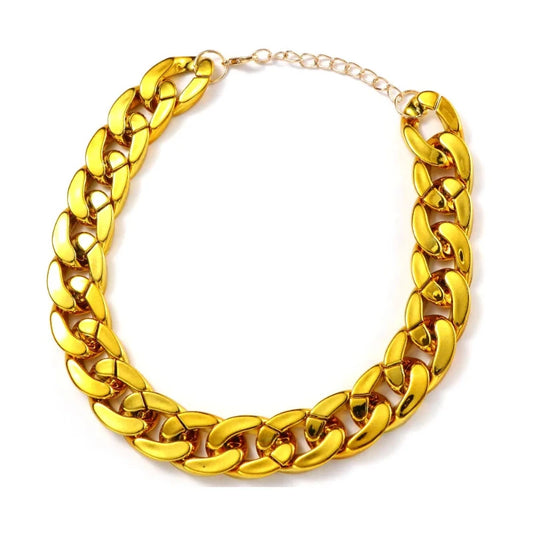 Sale
SaleGold dog collar
Regular price $35.00 USDRegular priceUnit price per$41.00 USDSale price $35.00 USDSale -
Metal chain dog collar
Regular price $35.00 USDRegular priceUnit price per$41.00 USDSale price $35.00 USDSale -
Girl dog chain collar
Regular price $35.00 USDRegular priceUnit price per$41.00 USDSale price $35.00 USDSale -
Diamond chain dog collar
Regular price $28.00 USDRegular priceUnit price per$35.00 USDSale price $28.00 USDSale -
Cuban dog collar chain
Regular price $35.00 USDRegular priceUnit price per$41.00 USDSale price $35.00 USDSale -
Chain link dog collar
Regular price $35.00 USDRegular priceUnit price per$41.00 USDSale price $35.00 USDSale -
Small dog gold chain collar
Regular price $35.00 USDRegular priceUnit price per$41.00 USDSale price $35.00 USDSale -
Thick dog collar chain
Regular price $41.00 USDRegular priceUnit price per$55.00 USDSale price $41.00 USDSale -
Thick dog chain collar
Regular price $35.00 USDRegular priceUnit price per$41.00 USDSale price $35.00 USDSale -
Dog collar with chain loop
Regular price $28.00 USDRegular priceUnit price per$35.00 USDSale price $28.00 USDSale
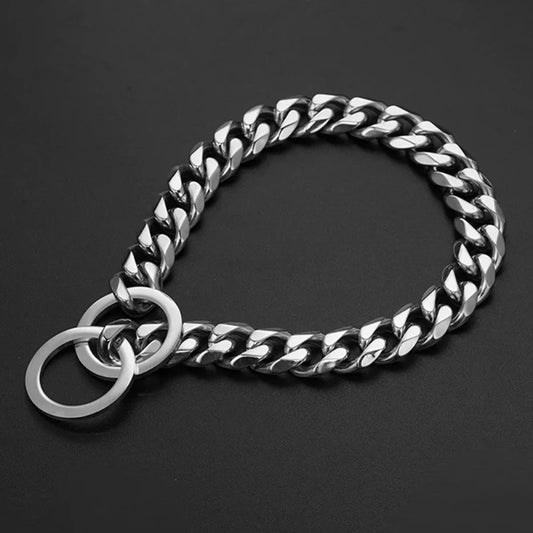
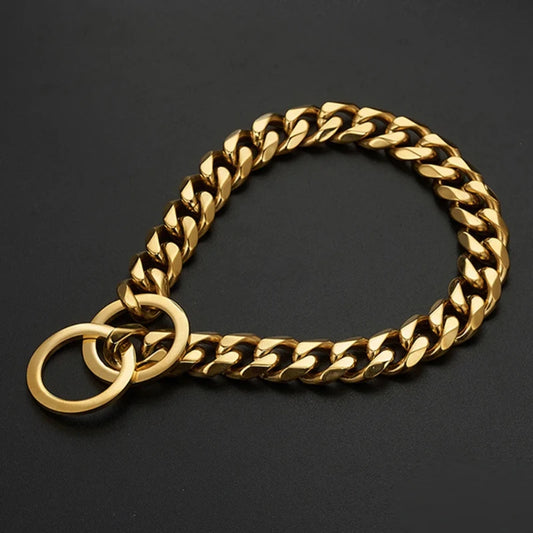
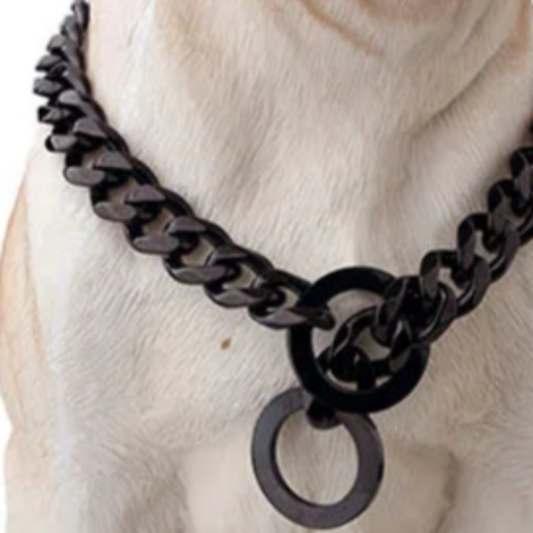
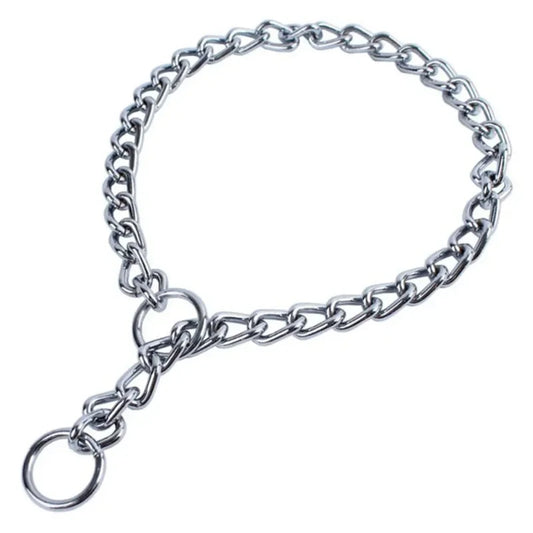
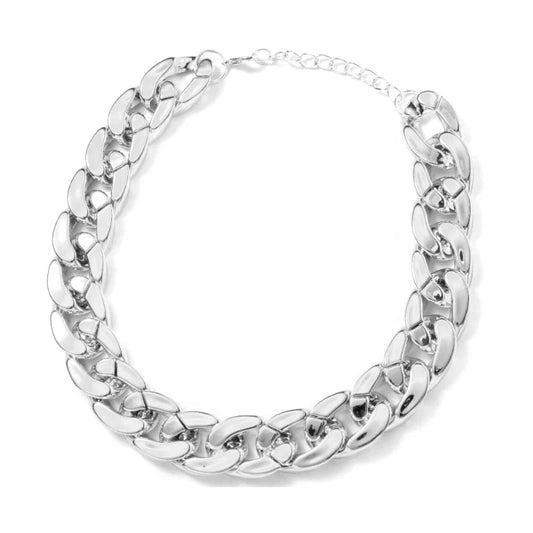

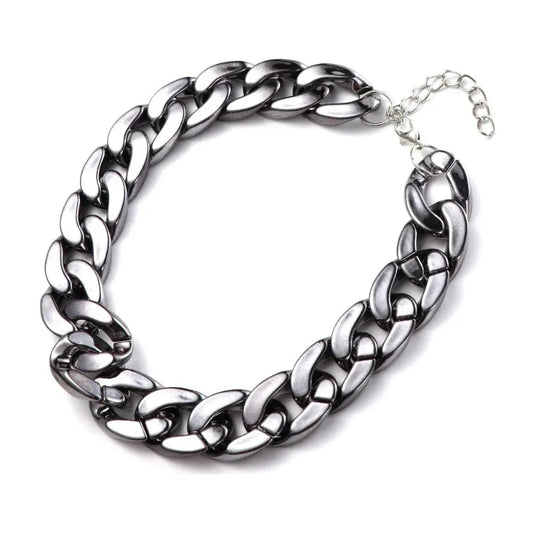


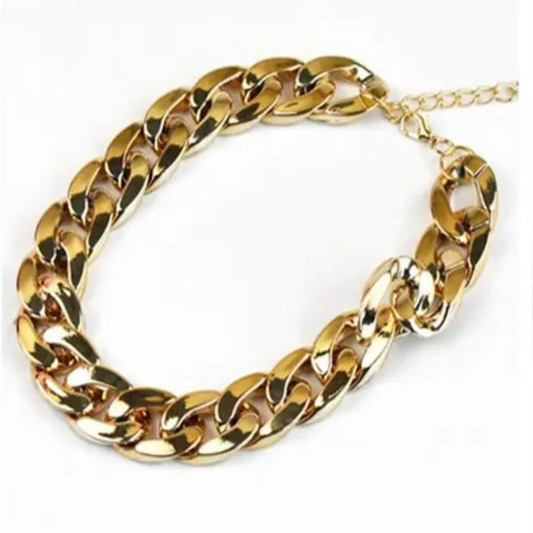
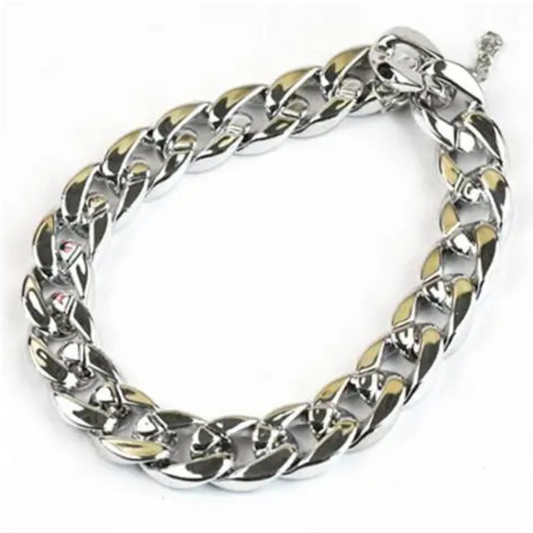
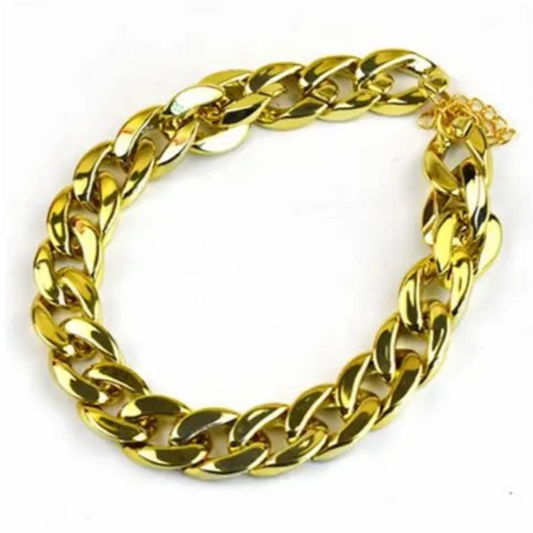

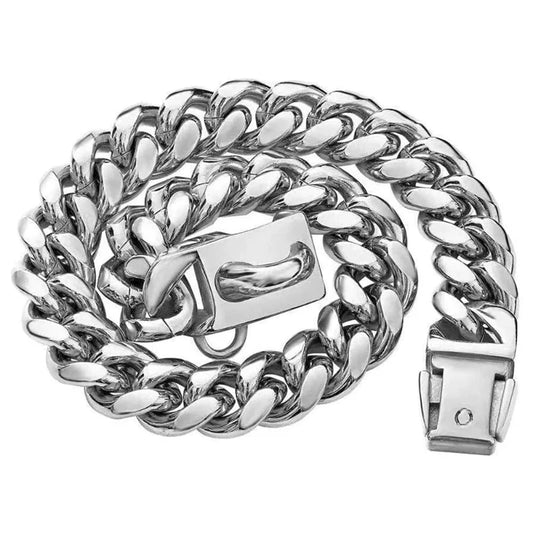
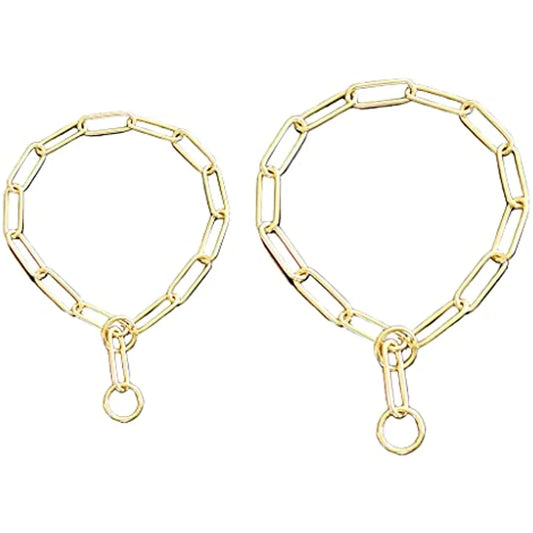
Dog chain collars have a very different look from fabric, leather or rope collars. There is no padded band or patterned material to distract from the design. What you see is mostly the chain itself and the hardware that goes with it.
Start with the Chain Itself
The size of the links changes the whole appearance of the collar.
A finer chain can look fairly understated, while larger links give it a much heavier look. This is particularly noticeable on smaller dogs, where chunky metalwork can take up quite a lot of space around the neck.
Have a look at any photographs showing the collar from the side. They usually give a better idea of the thickness than a picture taken from directly above.
The measurements on the product page are more useful still.
Check the Length Properly
With a chain collar, don't rely on labels such as small, medium or large.
Check the actual measurements given for the individual product and compare them with your dog.
How the collar is put on can matter too. Some chain designs may need to pass over the dog's head rather than opening with a buckle, so the neck measurement isn't necessarily the only thing worth considering.
Follow the fitting information supplied with the particular collar rather than using instructions from a different chain design.
Not Every Chain Collar Works in the Same Way
The phrase “dog chain collar” can cover more than one construction.
Some designs may stay at a fixed size. Others can include a section that moves when there is tension on the lead.
This is also where chain collars can be confused with half check, martingale or slip collars.
The photographs and written description should make the individual design clearer.
Weight Is Worth Thinking About
Metal naturally feels different from fabric.
Even a fairly compact chain collar can feel more substantial in the hand than a lightweight nylon one. The link size and amount of metal used will affect that.
This doesn't automatically make a heavier collar better or worse. It simply changes how substantial it feels and looks.
The scale of the links can matter just as much as the overall length.
Look at the Lead Attachment
The lead attachment is another detail worth checking.
Have a look at where the lead connects and how that part sits alongside the rest of the chain. On some designs the attachment may blend into the collar quite neatly, while on others it can be more noticeable.
Don't assume every metal ring shown in a photograph is intended for the same purpose.
The individual listing should explain how that particular collar is designed to be used.
Chain Collars and Pulling
Chain collars are sometimes bought because a dog pulls, but the collar itself doesn't teach a dog how to walk on a lead.
If the design moves or tightens when tension is applied, that is simply part of how that collar works.
Training is a separate matter.
It is better to understand the construction and choose the collar because that is the type you want rather than expecting the hardware to change a dog's behaviour.
If you are unsure how a particular chain collar should be fitted or used, follow appropriate guidance for that specific design.
Cleaning the Metal
One advantage of having no fabric band is that there is less material to hold loose hair or mud, but that doesn't mean every chain collar should automatically be cleaned in the same way.
Have a Look at the Links Now and Again
Because the whole collar is made up of joined metal sections, the links are worth checking from time to time.
You don't need to inspect every single one before each walk.
Just have a quick look while the collar is already in your hand. If a link appears distorted, badly worn or different from the others, stop and check it before putting the collar back on.
Do the same with the lead attachment and any other moving parts.
Is a Chain Collar the Type You Want?
The main difference is the feel and construction.
A leather or nylon collar gives you a flat band around the neck. A dog chain collar uses metal links instead, which gives it a much more stripped-back appearance.
If you like that style, compare the available collars by length, link size, weight and how the lead attaches.
If you would rather have padding, a quick-release buckle or a softer band, another type of collar may make more sense.
The individual product page should give you the measurements and details you need before choosing.