
-
 Sale
SalePremium dog collar
Regular price $28.00 USDRegular priceUnit price per$35.00 USDSale price $28.00 USDSale -
2 inch dog collar with handle
Regular price $35.00 USDRegular priceUnit price per$41.00 USDSale price $35.00 USDSale -
Leather agitation dog collar with handle
Regular price $28.00 USDRegular priceUnit price per$35.00 USDSale price $28.00 USDSale -
Tactical dog collar with handle
Regular price $35.00 USDRegular priceUnit price per$41.00 USDSale price $35.00 USDSale -
Military dog collar with handle
Regular price $35.00 USDRegular priceUnit price per$41.00 USDSale price $35.00 USDSale -
Wide dog collar with handle
Regular price $35.00 USDRegular priceUnit price per$41.00 USDSale price $35.00 USDSale -
5cm dog collar with handle
Regular price $35.00 USDRegular priceUnit price per$41.00 USDSale price $35.00 USDSale -
 Sale
SaleNo slip dog collar
Regular price $28.00 USDRegular priceUnit price per$35.00 USDSale price $28.00 USDSale -
Forest green dog collar
Regular price $35.00 USDRegular priceUnit price per$41.00 USDSale price $35.00 USDSale -
Extra large dog collar with handle
Regular price $28.00 USDRegular priceUnit price per$35.00 USDSale price $28.00 USDSale -
 Sale
SaleFlat dog collar
Regular price $35.00 USDRegular priceUnit price per$41.00 USDSale price $35.00 USDSale -
 Sale
SaleLocking dog collar
Regular price $28.00 USDRegular priceUnit price per$35.00 USDSale price $28.00 USDSale -
Camouflage dog collar
Regular price $35.00 USDRegular priceUnit price per$41.00 USDSale price $35.00 USDSale -
Survival cord dog collar
Regular price $28.00 USDRegular priceUnit price per$35.00 USDSale price $28.00 USDSale -
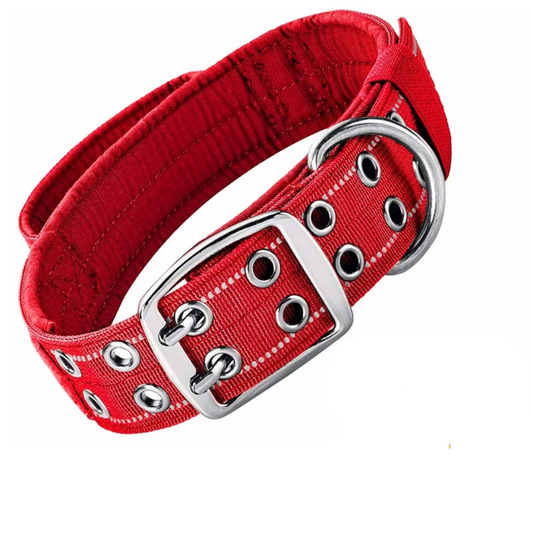 Sale
SaleDog walking collar
Regular price $28.00 USDRegular priceUnit price per$35.00 USDSale price $28.00 USDSale -
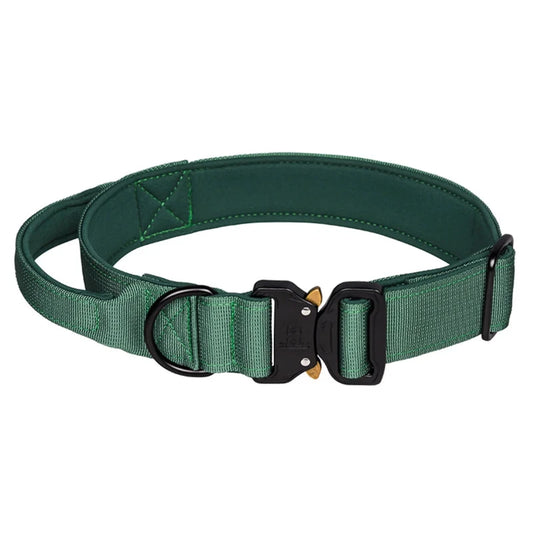 Sale
SaleDog pinch collar
Regular price $28.00 USDRegular priceUnit price per$35.00 USDSale price $28.00 USDSale
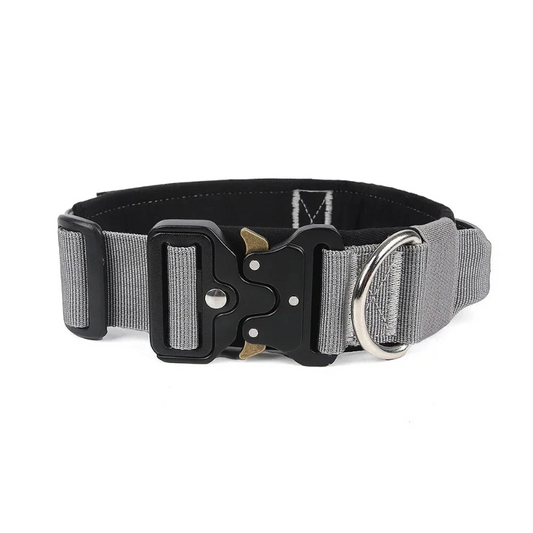
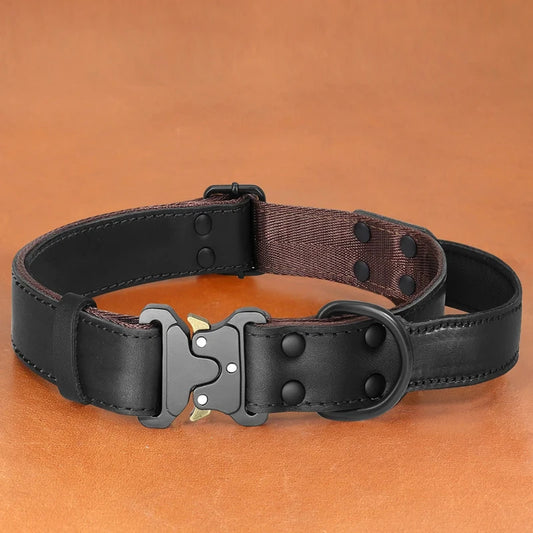
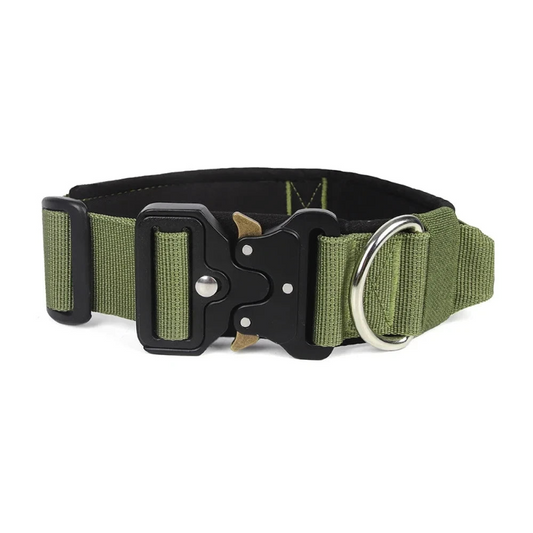
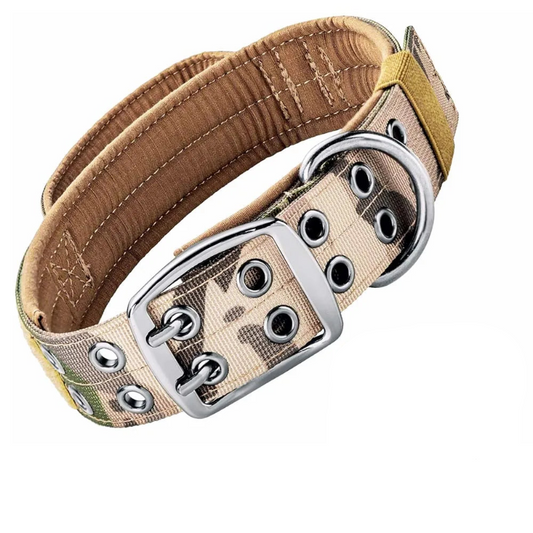
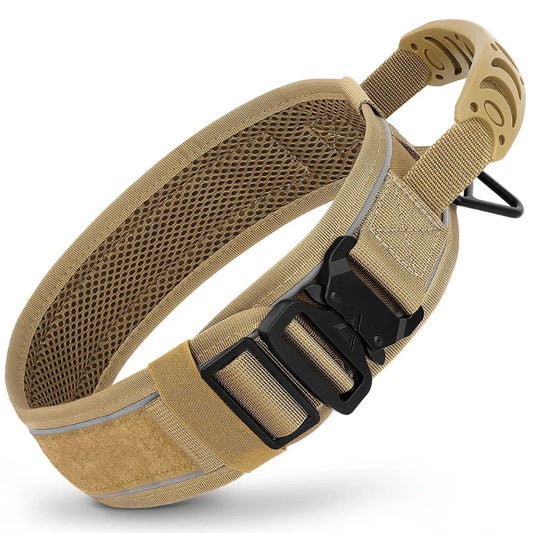
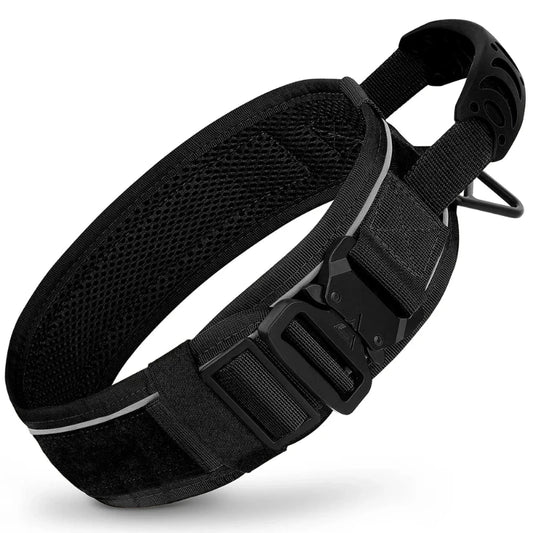
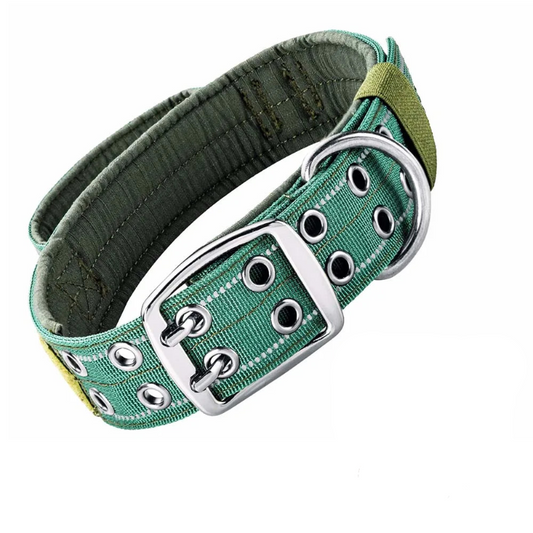
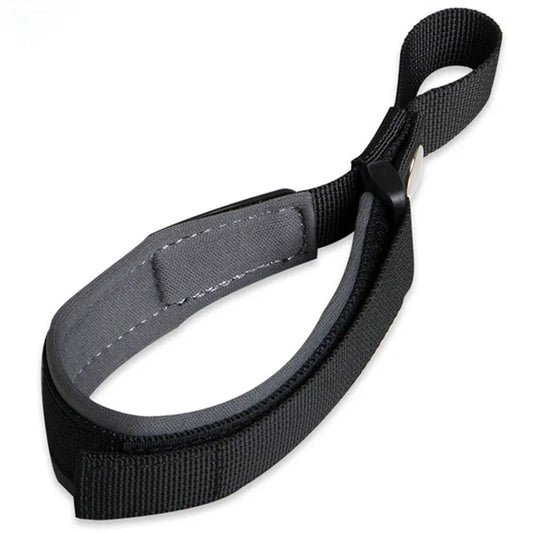
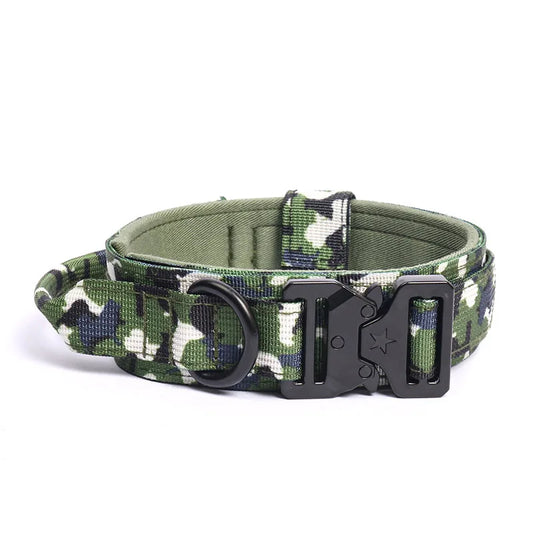
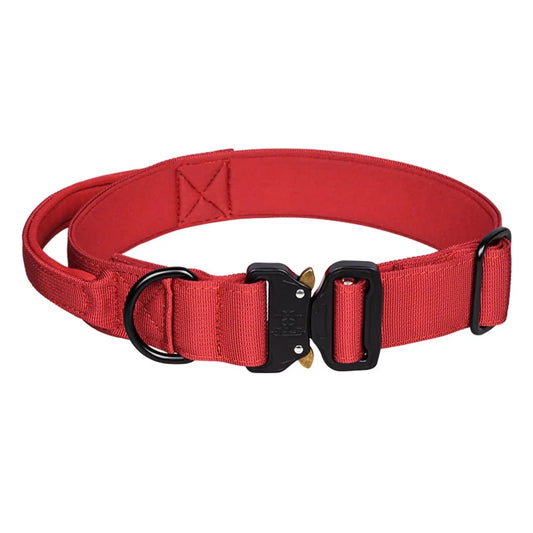
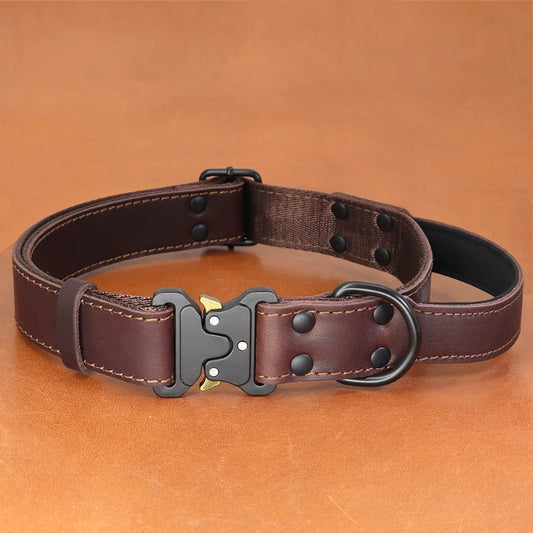
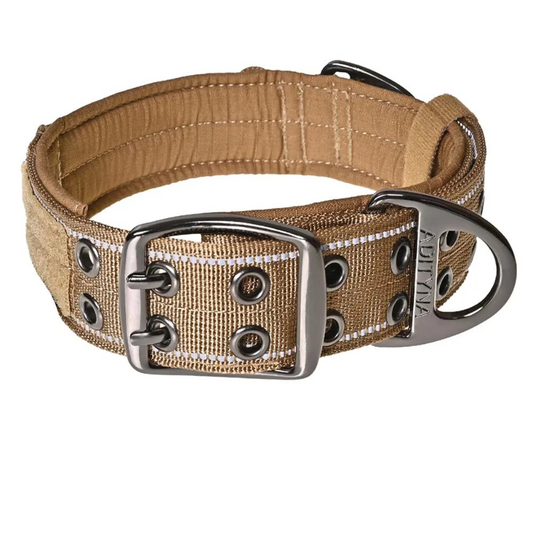
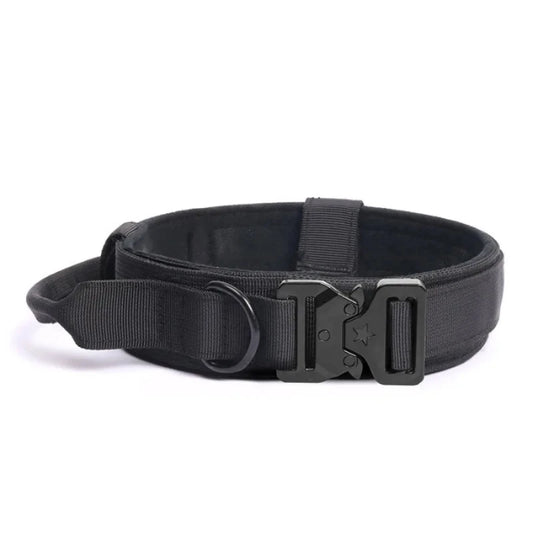
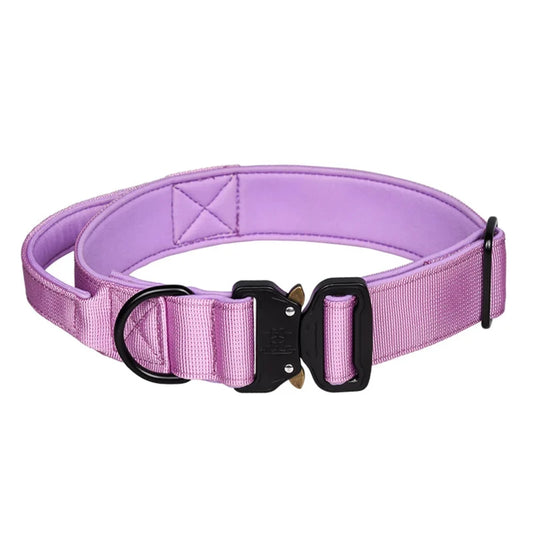
The obvious difference with these collars is the handle built into the top.
It gives you somewhere to take hold of the collar directly rather than reaching down for the lead. Some handles sit quite flat when they are not being used, while others stand further away from the main band.
That might seem like a small detail in the photographs, but it can change how bulky the collar feels once it is actually on the dog.
Have a Look at the Handle
The handle is the main reason for choosing this type of collar, so it is worth looking at more than its general shape.
Check where it joins the collar and how much room there is to get your hand around it. A very compact handle can sit neatly against the neck, while a larger one may be easier to spot and grab.
The side photographs are usually more useful than the main image for this.
Size and Width Still Matter
A handle doesn't change the basic job of getting the collar size right.
Measure your dog's neck and compare that with the sizing on the individual product page.
Width deserves a look as well.
A broad collar with a large handle can look quite substantial, particularly on a dog that normally wears something narrow. The same design may look far more in proportion on a broader neck.
Photographs give you a rough idea, but the actual measurements are much more useful.
Don't Assume the Handle Is for Lifting
A handle gives you another place to hold the collar, but that does not automatically mean the collar is designed for lifting or carrying a dog.
Unless the individual product specifically says otherwise, it is better not to treat the handle as a carrying handle.
That is particularly important with larger dogs, where lifting would put considerably more load through the collar, handle and stitching.
Use the handle for the purpose stated on the particular product page rather than assuming every collar with a handle has the same intended use.
Check Where Everything Joins Together
The area around the handle gets more attention than it would on a standard flat collar.
Have a look at the points where it joins the main band. The same goes for the lead attachment and fastening.
If there is visible stitching around these areas, check it from time to time. Loose threads on the surface are one thing; stitching that is actually pulling apart needs a closer look.
You don't need to inspect the collar every five minutes. A quick check when you put it on is usually enough to notice if something has changed.
Using the Handle
If you do take hold of the handle try and avoid sudden jerking or twisting movements.
It is a short handhold attached directly to the collar. It behaves differently from holding a longer lead.
Exactly how and when it should be used will depend on the particular design and your dog. If you bought the collar for a specific handling or training purpose. Follow appropriate guidance rather than relying on the handle alone.
The handle itself does not train a dog, prevent pulling or guarantee that a dog cannot move away.
Cleaning Around the Handle
The handle is one of those places where dog hair and dirt can build up without you really noticing.
How you clean the rest of the collar depends on the material, so stick to the instructions for that particular one.
It is also a good spot to check while you are there. Have a look at the stitching around the handle and where the lead ring is attached, especially if the collar gets used a lot.
Choosing Between the Collars
Start with the neck measurement, then look at the collar width.
After that, compare the handles. Is it fairly flat against the collar or more pronounced? How is it attached? Where does the lead connect in relation to it?
Those are the details that make one dog collar with a handle feel quite different from another.
Colour and appearance can come afterwards.
If you mainly want a simple flat collar with as little extra bulk as possible, a standard collar may suit you better. If you specifically want a built-in handhold. These designs give you that feature without needing a separate strap attached to the collar.