
-
2 inch tactical dog collar
Regular price $41.00 USDRegular priceUnit price per$48.00 USDSale price $41.00 USDSale -
Green tactical dog collar
Regular price $35.00 USDRegular priceUnit price per$48.00 USDSale price $35.00 USDSale -
 Sale
SaleMountain dog collar
Regular price $41.00 USDRegular priceUnit price per$48.00 USDSale price $41.00 USDSale -
Light brown dog collar
Regular price $41.00 USDRegular priceUnit price per$48.00 USDSale price $41.00 USDSale -
 Sale
SaleBlue collar tactical
Regular price $35.00 USDRegular priceUnit price per$41.00 USDSale price $35.00 USDSale -
Wide tactical dog collar
Regular price $35.00 USDRegular priceUnit price per$41.00 USDSale price $35.00 USDSale -
Large tactical dog collar
Regular price $41.00 USDRegular priceUnit price per$48.00 USDSale price $41.00 USDSale -
Waterproof tactical dog collar
Regular price $41.00 USDRegular priceUnit price per$48.00 USDSale price $41.00 USDSale -
Red tactical dog collar
Regular price $35.00 USDRegular priceUnit price per$41.00 USDSale price $35.00 USDSale -
Tactical collar for large dogs
Regular price $41.00 USDRegular priceUnit price per$48.00 USDSale price $41.00 USDSale -
Tactical puppy collar
Regular price $41.00 USDRegular priceUnit price per$48.00 USDSale price $41.00 USDSale -
 Sale
SaleK9 tactical collar
Regular price $41.00 USDRegular priceUnit price per$55.00 USDSale price $41.00 USDSale -
Extra strong dog collar
Regular price $41.00 USDRegular priceUnit price per$48.00 USDSale price $41.00 USDSale -
Tactical collar for small dogs
Regular price $35.00 USDRegular priceUnit price per$48.00 USDSale price $35.00 USDSale -
Light blue dog collar
Regular price $35.00 USDRegular priceUnit price per$55.00 USDSale price $35.00 USDSale -
 Sale
SaleDog guard collar
Regular price $41.00 USDRegular priceUnit price per$48.00 USDSale price $41.00 USDSale
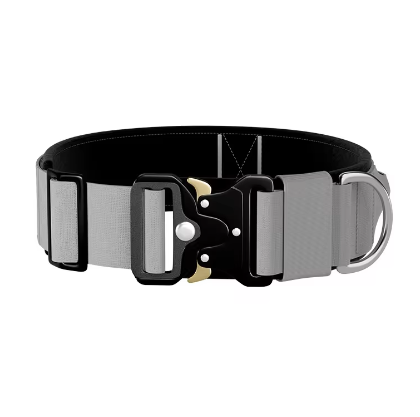


Tactical dog collars are noticeably chunkier than many everyday collars. The wider band, heavier-looking fittings and handle on top give them a very different feel from a narrow fabric collar.
Most of the designs in this collection use thick nylon, with adjustable sections and a D-ring for attaching a lead. Some also have a handle built directly into the collar.
If that heavier style is what you are looking for, spend a little time comparing the individual collars. Width, hardware and the way the handle is positioned can make quite a difference once the collar is actually on the dog.
The Handle Is One of the Main Differences
The handle is probably the feature people notice first.
It sits on the top of the collar and gives you another place to hold the collar directly rather than reaching for the lead. How large that handle is, and how closely it sits against the collar when not being used, can vary between designs.
Have a good look at the side photographs if they are available. They often give a much better idea of how bulky the handle is than a straight-on product picture.
Some handles lie fairly flat. Others stand away from the main band a little more.
That may not sound like a big difference, but it can change the overall shape of the collar quite a lot.
Thick Nylon and a Wider Band
Tactical collars are usually broader and more substantial.
The thicker material gives them their familiar structured appearance. It also means that a collar which looks fairly ordinary in a product photograph may feel noticeably heavier in the hand than a slim everyday design.
This is worth thinking about if your dog normally wears something narrow.
Don't choose by breed alone. A broad collar may look in proportion on one dog and oversized on another, even if the two dogs are roughly the same weight.
The product measurements will give you a much better idea.
Have a Look at the Buckle
The fastening is another area where tactical collars can differ.
Some use a quick-opening clip or buckle rather than the traditional pin buckle found on many leather collars.
It is also worth looking at where the adjustment section sits.
Once you have the collar in your hands, make sure the buckle closes properly and look over it occasionally for obvious damage. If a fastening has cracked, distorted or stopped closing as it should, don't carry on using it simply because the rest of the collar still looks fine.
D-Rings and Other Hardware
The D-ring is the obvious attachment point for a lead on many of these collars.
Because tactical designs often use larger fittings, the hardware can be more noticeable than it is on a narrow collar. Some people like that heavier appearance; others mainly choose the style because they want the handle and wider band.
Look at how the D-ring is attached to the collar as well as the ring itself.
The stitching around heavily used areas is worth checking from time to time. A quick glance at the handle, fastening and D-ring only takes a few seconds.
Check the Width as Well as the Neck Size
Neck measurement is only part of choosing a tactical dog collar.
Width matters too.
A wide collar covers more of the neck and can look very different once fitted. This is particularly noticeable if your dog has previously worn a thin collar.
The photographs can help and don't rely on them entirely. Camera angles and the size of the dog being used in the picture can make a collar appear narrower or broader than expected.
Check the measurements on the individual listing before ordering.
There is no need to assume that every large dog needs the widest tactical collar available either. The actual neck measurement and the proportions of the collar are more useful than a general breed label.
A Heavier Collar Isn't for Everyone
The tactical look is quite specific.
If you want a lightweight collar with small fittings, this probably isn't the section of the site to start with. These designs are generally more substantial, with thicker material and more visible hardware.
For some dogs, that is exactly the look an owner wants. For others, a standard nylon or leather collar may make more sense.
Keeping a Tactical Collar Clean
Nylon can pick up dust, mud and hair over time, particularly around stitching and underneath the handle.
How you clean it should depend on the instructions for that particular collar. There is no point assuming every tactical collar can be washed in exactly the same way.
If it only needs a quick clean, start with whatever care information is supplied with the product.
While you are doing that, check the areas that get handled most often. The buckle, D-ring, adjustment section and handle are sensible places to look.
Choosing Between the Designs
Once you know the neck size you need, comparing tactical dog collars is fairly straightforward.
Look at the width first. Then check the handle, fastening and D-ring.
After that, things such as colour and general appearance are really down to preference.
A collar with a large grab handle and chunky fittings has quite a different look from one where those parts sit closer to the band, even though both fall under the same tactical style.
The individual listing will tell you far more than the collection photograph, particularly when it comes to sizing and how the collar is put together.